
Boat Fire Safety: Prevention and Extinguisher Requirements
Boat Fire Safety: Prevention and Extinguisher Requirements
At Shell Point Marina, we treat boat fire safety as a routine part of ownership, not an afterthought. We start every walkthrough with engine and battery inspections, proper ventilation checks, and USCG-approved extinguishers rated for gasoline and electrical fires. Federal regulations under 33 CFR Part 175 Subpart E, effective April 20, 2022, require extinguisher replacement 12 years after manufacture, and we recommend checking pressure gauges monthly and confirming compliance before every trip out of Ruskin, FL.
Key Takeaways
Fire extinguishers require annual inspection to ensure proper charge and immediate effectiveness on all vessels. We build this check into every pre-season visit so gauges and seals get verified before a boat ever leaves the dock.
Outboard motorboats under 26 feet with open construction do not require onboard fire extinguishers under current federal rules. That exemption disappears the moment a closed compartment, permanent fuel tank, or paying passenger enters the picture.
All fire extinguishers must remain readily accessible and in condition for immediate use at all times. We check mounting position and charge status together, since a hidden or expired unit offers no real protection.
Federal regulations for recreational vessel fire protection are published in the Federal Register under 2021-22578. We keep this citation on hand for owners who want to review the source language directly rather than a summary.
Fire extinguishers require annual inspection to ensure proper charge and immediate effectiveness on all vessels. We build this check into every pre-season visit so gauges and seals get verified before a boat ever leaves the dock.
Outboard motorboats under 26 feet with open construction do not require onboard fire extinguishers under current federal rules. That exemption disappears the moment a closed compartment, permanent fuel tank, or paying passenger enters the picture.
All fire extinguishers must remain readily accessible and in condition for immediate use at all times. We check mounting position and charge status together, since a hidden or expired unit offers no real protection.
Federal regulations for recreational vessel fire protection are published in the Federal Register under 2021-22578. We keep this citation on hand for owners who want to review the source language directly rather than a summary.
What Will This Fire Safety Guide Help You Do?
This guide gives you a clear path to boat fire safety before you leave the dock. We’re based in Ruskin, FL, just minutes from Tampa Bay, and we give you a practical spot to run on-water fire safety checks before any departure. Preparation matters more than luck once flames start on a vessel.
Before running through the steps below, gather a few things: your fire extinguisher, its inspection tag, and access to your engine compartments.
Confirm current fire extinguisher requirements apply to your vessel length and construction. Rules shift based on how your boat is built, so we always start here before touching any equipment.
Inspect the extinguisher gauge and manufacture date stamped on the cylinder. A quick glance tells us whether the unit still holds a proper charge or needs replacing before you head out.
Check closed compartments, fuel tank storage areas, and double bottoms for fuel vapor risk. These enclosed spaces trap fumes faster than open construction, so we treat them as priority checkpoints.
Review marine fire prevention habits with everyone on board, including engine shutdown procedure. Getting your crew comfortable with these steps means faster reactions if smoke or flame ever appears.
Stow the fire extinguisher boat owners rely on somewhere reachable, not buried under gear. We look for a spot near the helm or cabin entrance where you can grab it within seconds.
Confirm current fire extinguisher requirements apply to your vessel length and construction. Rules shift based on how your boat is built, so we always start here before touching any equipment.
Inspect the extinguisher gauge and manufacture date stamped on the cylinder. A quick glance tells us whether the unit still holds a proper charge or needs replacing before you head out.
Check closed compartments, fuel tank storage areas, and double bottoms for fuel vapor risk. These enclosed spaces trap fumes faster than open construction, so we treat them as priority checkpoints.
Review marine fire prevention habits with everyone on board, including engine shutdown procedure. Getting your crew comfortable with these steps means faster reactions if smoke or flame ever appears.
Stow the fire extinguisher boat owners rely on somewhere reachable, not buried under gear. We look for a spot near the helm or cabin entrance where you can grab it within seconds.
Where Can Boaters Get Hands-On Safety Support?
We provide a welcoming environment at Shell Point Marina where boaters of every experience level find support with maintenance and safety needs. Our dockside guidance pairs with repair and storage services, so your questions about fire safety never go unanswered.
Why Does Understanding Fire Extinguisher Requirements Matter Before an Outing?
Fire extinguisher rules dictate the type and number of extinguishers required for a given vessel size. Skipping this review leaves you exposed to unsafe equipment and preventable onboard fires. Our solutions at Shell Point Marina cover repairs, secure storage, and safety guidance, giving you a dependable resource before you ever leave the dock.
Which Fire Extinguisher Type Fits Your Boat?
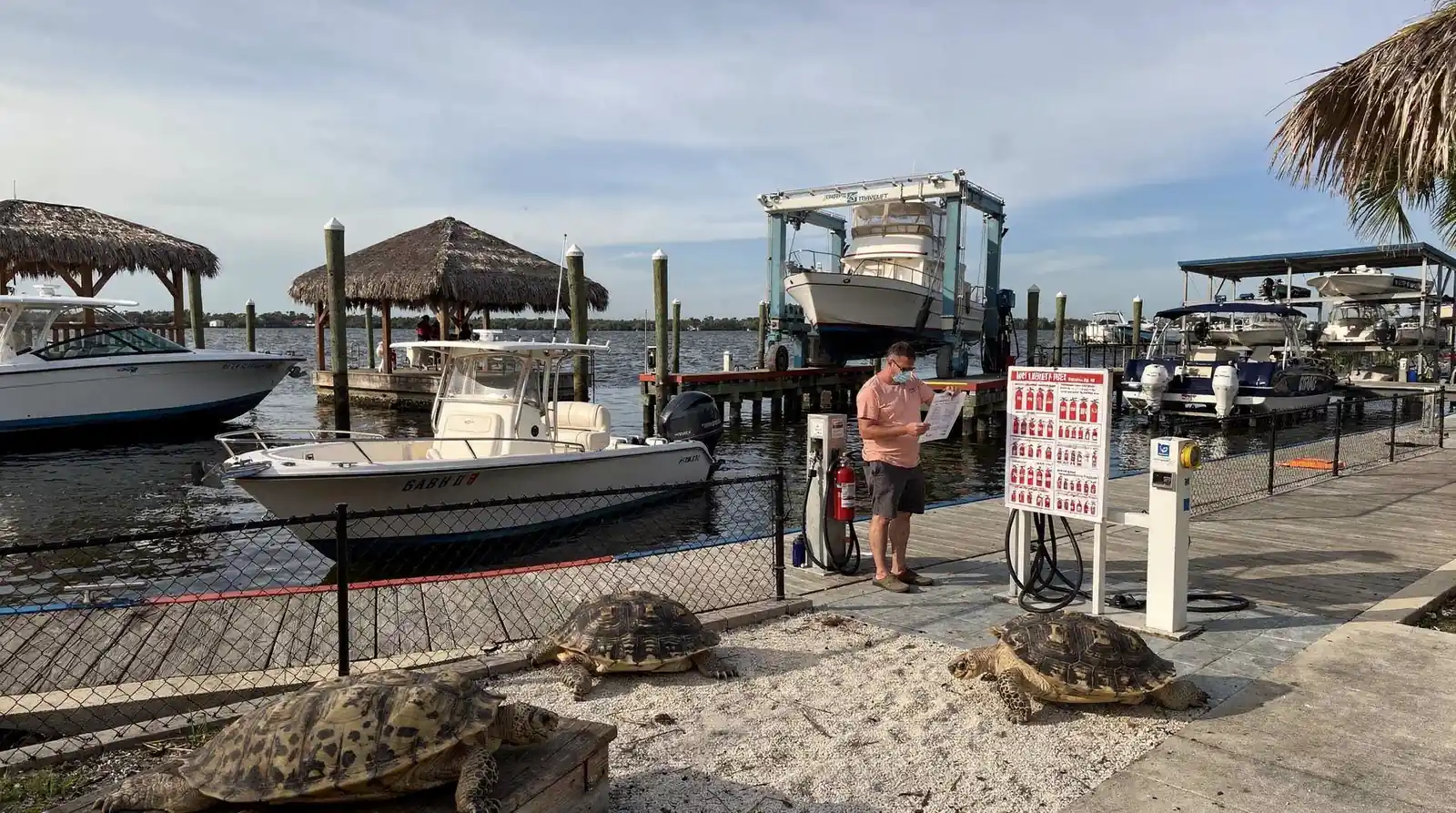
Fire extinguisher boat selection starts with vessel length, not personal preference. Federal regulations organize carriage requirements by length in a reference table, and matching the correct extinguisher to a boat’s size is the foundation of sound boat fire safety. Skipping this step leaves you exposed to fines and, worse, unprotected during an actual onboard fire.
We recommend the following process before heading out this season:
Measure the boat’s overall length from bow to stern. Getting this number right the first time keeps every later step accurate, since the whole table hinges on it.
Cross-reference that length against the Vessel Length and Fire Extinguisher Type Table published under federal fire protection rules. This table sets the minimum requirement for your specific size class, so we always pull the current version before advising an owner.
Confirm the extinguisher’s rated type matches what the table specifies for that length class. A mismatched rating can leave you technically equipped but still unprotected against the fire your boat is most likely to face.
Inspect the manufacture date stamped on the unit and verify current charge status. Both details tell us whether the extinguisher is still legally and functionally ready for service.
Mount the extinguisher in an accessible bracket near the helm or cabin entrance. Placement matters as much as the rating, since a unit you can’t reach in seconds won’t help during a real fire.
Measure the boat’s overall length from bow to stern. Getting this number right the first time keeps every later step accurate, since the whole table hinges on it.
Cross-reference that length against the Vessel Length and Fire Extinguisher Type Table published under federal fire protection rules. This table sets the minimum requirement for your specific size class, so we always pull the current version before advising an owner.
Confirm the extinguisher’s rated type matches what the table specifies for that length class. A mismatched rating can leave you technically equipped but still unprotected against the fire your boat is most likely to face.
Inspect the manufacture date stamped on the unit and verify current charge status. Both details tell us whether the extinguisher is still legally and functionally ready for service.
Mount the extinguisher in an accessible bracket near the helm or cabin entrance. Placement matters as much as the rating, since a unit you can’t reach in seconds won’t help during a real fire.
Consideration
Why It Matters
Vessel length
Determines required extinguisher type per federal table
Boat model year
Newer builds may fall under updated equipment standards
Governing regulation
Sets the legal baseline for compliance
Do I need to replace my fire extinguisher if my boat is newer?
Owners of boats built in model year 2018 or later may need updated fire extinguishers under current federal rules. We advise checking the model year against the applicable table before assuming an older extinguisher still qualifies. This step matters most for recently purchased used boats where prior equipment may predate current standards.
Where is the fire protection regulation for recreational vessels located?
The governing rule sits in 33 CFR Chapter 1, Subchapter S, Part 175, Subpart E, and you can reference it directly for full requirements. We keep this citation on hand for owners who want the source language rather than a summary.
Our service yard supports the local boating community with tailored, top-quality service, including helping you confirm your marine fire prevention equipment meets current standards before departure.
Does Your Boat Legally Need an Extinguisher?
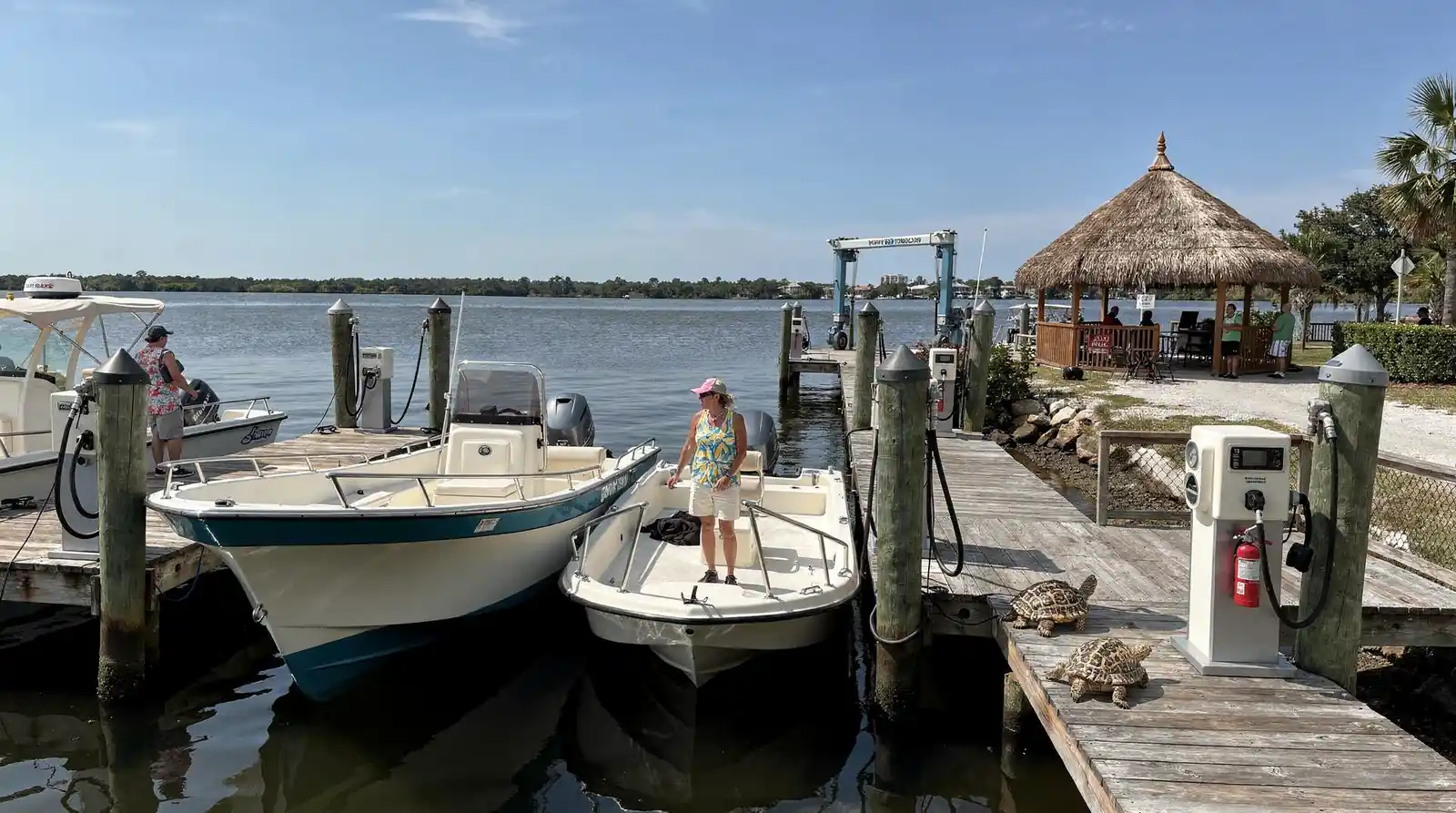
Federal law determines fire extinguisher boat requirements based on vessel length, engine type, and fuel tank setup. We walk every owner in our slips through this checklist before the boat ever leaves the dock. Guessing at compliance invites steep consequences on the water.
Small open outboard boats sometimes catch a break. Vessels under 26 feet, built with open construction, and not carrying passengers for hire may qualify for an exemption from carrying an extinguisher. That exemption disappears fast once a few common features enter the picture.
Which boats always need a fire extinguisher on board?
Certain construction and fuel details override any length-based exemption. We flag these conditions during every pre-season check we run for members:
Confirm whether the boat has a closed compartment under thwarts or seats used to store a portable fuel tank. If it does, carrying a fire extinguisher becomes mandatory regardless of the boat’s overall length.
Check for permanently installed fuel tanks, since these trigger the same mandatory requirement as a closed compartment. We treat a fixed tank as an automatic disqualifier for any small-boat exemption.
Identify the engine type, because any boat with an inboard engine must carry a fire extinguisher regardless of overall length or open construction. We flag inboard-powered boats first during every walkthrough for this reason.
Confirm whether the boat has a closed compartment under thwarts or seats used to store a portable fuel tank. If it does, carrying a fire extinguisher becomes mandatory regardless of the boat’s overall length.
Check for permanently installed fuel tanks, since these trigger the same mandatory requirement as a closed compartment. We treat a fixed tank as an automatic disqualifier for any small-boat exemption.
Identify the engine type, because any boat with an inboard engine must carry a fire extinguisher regardless of overall length or open construction. We flag inboard-powered boats first during every walkthrough for this reason.
Does engine type change the rules?
Engine type matters more than most owners expect. An inboard engine alone forces mandatory carriage, even on a boat that would otherwise qualify for the small-outboard exemption. We treat this as a boat fire safety baseline, not an optional upgrade.
Given how many fuel and engine configurations trigger mandatory carriage, we recommend treating an extinguisher as standard gear on any vessel we service. Effective marine fire prevention starts with knowing exactly which category your boat falls into before you push off.
How Many Extinguishers Does Your Boat Need?
The number of extinguishers a vessel must carry depends on vessel length, engine compartments, and fuel storage areas. Federal fire protection rules for recreational vessels took effect on April 20, 2022, and these rules now set the baseline for boat fire safety aboard every craft we service.
We treat this rule as the starting point for marine fire prevention planning. Carriage requirements cover two separate questions: which type of extinguisher a boat needs, and how many units it must carry. Getting one right without the other still leaves a vessel out of compliance.
We walk boat owners through the same process every pre-season:
Measure overall vessel length, since carriage minimums scale upward as length increases. We start every count here because length alone can shift the requirement by a full extinguisher or more.
Identify enclosed engine compartments, closed fuel storage spaces, and any double-bottom hull sections that could trap fumes. Each of these spaces counts separately toward the total extinguisher requirement.
Match each qualifying space to a required extinguisher count rather than assuming one unit covers the whole boat. We’ve seen owners under-equip a boat simply by treating multiple compartments as a single space.
Confirm placement so every extinguisher stays reachable in seconds, not buried under gear. A unit that takes too long to reach defeats the purpose of carrying it at all.
Repeat this count check whenever a vessel is refitted, resold, or moved to a larger slip. Configuration changes almost always shift the extinguisher count, so we never assume the old number still applies.
Measure overall vessel length, since carriage minimums scale upward as length increases. We start every count here because length alone can shift the requirement by a full extinguisher or more.
Identify enclosed engine compartments, closed fuel storage spaces, and any double-bottom hull sections that could trap fumes. Each of these spaces counts separately toward the total extinguisher requirement.
Match each qualifying space to a required extinguisher count rather than assuming one unit covers the whole boat. We’ve seen owners under-equip a boat simply by treating multiple compartments as a single space.
Confirm placement so every extinguisher stays reachable in seconds, not buried under gear. A unit that takes too long to reach defeats the purpose of carrying it at all.
Repeat this count check whenever a vessel is refitted, resold, or moved to a larger slip. Configuration changes almost always shift the extinguisher count, so we never assume the old number still applies.
We accommodate vessels ranging from compact runabouts to cruising boats up to 50 feet in length with drafts up to 5 feet. Extinguisher needs shift noticeably across that range, and a small open runabout may need far fewer units than a larger cruiser with multiple enclosed compartments.
Does a Larger Boat Always Need More Extinguishers?
Generally, yes: as vessel length and the number of enclosed fuel or engine spaces grow, so does the required extinguisher count under the 2022 rule. We recommend rechecking counts any time you upgrade to a larger hull. A fire extinguisher boat requirement that fit a smaller craft rarely covers a bigger one.
How Do You Spot an Expired Extinguisher?
Three markers reveal whether a disposable fire extinguisher belongs on a boat or belongs in the trash: a UL (Underwriters Laboratories) trademark, a manufacture date stamped on the bottle, and an age past 12 years. We treat these three checkpoints as the baseline for boat fire safety on every vessel we service.
We walk our members through a quick inspection process before each season begins. Following these steps keeps a boat compliant and keeps our marina community confident in its equipment.
Locate the UL trademark on the extinguisher label. This mark confirms the unit was tested and certified, which is the first thing we check before trusting any extinguisher’s rating.
Find the manufacture date stamped into the bottle itself. This stamped code is the only reliable way to know how old the unit really is, since labels can fade or get replaced over time.
Calculate the extinguisher’s age from that stamped date. We do this math on the spot rather than guessing, since a few years’ difference can mean the unit is already past its service life.
Remove any non-rechargeable unit older than 12 years from service immediately. Keeping an expired unit onboard gives a false sense of protection it can no longer provide.
Replace the removed unit before the next outing. We’d rather see you delay a trip than head out with equipment that won’t perform in an emergency.
Locate the UL trademark on the extinguisher label. This mark confirms the unit was tested and certified, which is the first thing we check before trusting any extinguisher’s rating.
Find the manufacture date stamped into the bottle itself. This stamped code is the only reliable way to know how old the unit really is, since labels can fade or get replaced over time.
Calculate the extinguisher’s age from that stamped date. We do this math on the spot rather than guessing, since a few years’ difference can mean the unit is already past its service life.
Remove any non-rechargeable unit older than 12 years from service immediately. Keeping an expired unit onboard gives a false sense of protection it can no longer provide.
Replace the removed unit before the next outing. We’d rather see you delay a trip than head out with equipment that won’t perform in an emergency.
How Do We Read the Manufacture Date Stamp?
Manufacturers stamp a short code rather than a full date. A stamp reading “05,” for example, means the unit came off the line in 2005, placing it well past the 12-year service limit today. We recommend checking this stamp during every pre-season walk-through, not just once a year.
Why Does This Check Matter for Boat Storage?
If you’re near Ruskin, FL, you already know a vessel sitting idle between trips still needs current safety gear. We see marine fire prevention as an ongoing responsibility, not a one-time task completed at purchase. A clear picture of equipment condition, including every fire extinguisher boat owner relies on, protects against unmet expectations and unexpected liability down the road.
We encourage members storing vessels with us to fold this check into routine maintenance visits. Catching an expired unit before departure costs a few minutes; discovering it during an emergency costs far more.
Where Should You Mount Your Extinguisher?
Proper placement puts a fire extinguisher boat owner can reach within seconds of smelling smoke or seeing flame near the engine or fuel system. Mounting location determines whether boat fire safety succeeds or fails during an actual emergency. An extinguisher buried under gear does nothing to protect a crew. Our recommendation, built around federal accessibility requirements, follows a clear sequence.
Identify the boat’s highest-risk zones first: the engine compartment, fuel storage area, and galley if one exists. These are the spots where heat, fuel, and confined space combine most dangerously.
Mount a bracket near the helm or cockpit exit, keeping the unit visible and unobstructed by lines, life jackets, or coolers. A hidden extinguisher costs precious seconds that matter most in an actual fire.
Confirm the extinguisher stays within arm’s reach of an exit path, never behind a locked hatch or inside a sealed locker. We check this every time, since a locked or buried unit is functionally the same as having none at all.
Check the mount annually to confirm the gauge shows a proper charge and the unit remains in condition for immediate, effective use. We treat this as a non-negotiable part of every pre-season inspection.
Re-inspect placement whenever we prepare a boat for storage, since gear shifts during cleaning and hauling. What looked accessible in the spring can end up buried by the time a boat comes out of layup.
Identify the boat’s highest-risk zones first: the engine compartment, fuel storage area, and galley if one exists. These are the spots where heat, fuel, and confined space combine most dangerously.
Mount a bracket near the helm or cockpit exit, keeping the unit visible and unobstructed by lines, life jackets, or coolers. A hidden extinguisher costs precious seconds that matter most in an actual fire.
Confirm the extinguisher stays within arm’s reach of an exit path, never behind a locked hatch or inside a sealed locker. We check this every time, since a locked or buried unit is functionally the same as having none at all.
Check the mount annually to confirm the gauge shows a proper charge and the unit remains in condition for immediate, effective use. We treat this as a non-negotiable part of every pre-season inspection.
Re-inspect placement whenever we prepare a boat for storage, since gear shifts during cleaning and hauling. What looked accessible in the spring can end up buried by the time a boat comes out of layup.
We build this last step into our own storage process in Ruskin, FL. A thorough wash of the interior, exterior, and bilge removes fuel residue and grime that feed a fire, and it gives us a natural checkpoint to verify extinguisher position before layup.
How many extinguishers does a boat need?
Extinguisher count depends on vessel length, engine compartment configuration, and whether fuel is stored in enclosed spaces. If you’re heading into Tampa Bay through Ruskin, FL, we’re glad to check your placement against these accessibility standards.
Can an extinguisher be stored in a locker?
Storage in a closed, hard-to-reach locker violates the readily-accessible standard that governs marine fire prevention equipment. An extinguisher must stay visible and reachable at all times, not tucked away for the trip and forgotten until an inspection.
What Other Steps Prevent Fires Onboard?
Boat fire safety depends on identifying the specific risk areas built into a vessel’s design, not just carrying an extinguisher. Certain structural features trap fumes and fuel vapor, and each one calls for a deliberate prevention step before a boat leaves the dock.
We walk every vessel through the same risk-reduction checklist during our pre-season inspections. The steps below follow the order we recommend for owners preparing a boat for the water.
Inspect double bottoms. Confirm the space is either sealed to the hull or completely filled with flotation material. An unsealed double bottom that isn’t fully packed with flotation creates a pocket where fuel vapor and fire risk build together, and we check this on every vessel we service.
Ventilate closed living spaces. Fumes trapped in enclosed cabins raise fire risk faster than open layouts, so we check hatch seals and vents before departure. A cabin that smells even faintly of fuel tells us there’s a ventilation problem worth solving immediately.
Audit closed storage compartments. Any compartment holding combustible or flammable materials needs a fire extinguisher boat owner can reach without delay. We flag compartments that store rags, solvents, or spare fuel containers, since these items ignite faster than most owners expect.
Clean the bilge thoroughly. Bilge buildup of oil, fuel residue, and debris contributes directly to onboard fire hazards. We include bilge cleaning in every routine maintenance visit for this reason, and we treat a dirty bilge as a fire risk equal to an expired extinguisher.
Inspect double bottoms. Confirm the space is either sealed to the hull or completely filled with flotation material. An unsealed double bottom that isn’t fully packed with flotation creates a pocket where fuel vapor and fire risk build together, and we check this on every vessel we service.
Ventilate closed living spaces. Fumes trapped in enclosed cabins raise fire risk faster than open layouts, so we check hatch seals and vents before departure. A cabin that smells even faintly of fuel tells us there’s a ventilation problem worth solving immediately.
Audit closed storage compartments. Any compartment holding combustible or flammable materials needs a fire extinguisher boat owner can reach without delay. We flag compartments that store rags, solvents, or spare fuel containers, since these items ignite faster than most owners expect.
Clean the bilge thoroughly. Bilge buildup of oil, fuel residue, and debris contributes directly to onboard fire hazards. We include bilge cleaning in every routine maintenance visit for this reason, and we treat a dirty bilge as a fire risk equal to an expired extinguisher.
Why does bilge cleaning matter for fire prevention?
A dirty bilge holds fuel residue and oily buildup against warm engine components, and that combination raises ignition risk. We treat bilge cleaning as a core part of marine fire prevention, not an optional chore, and we schedule it alongside every haul-out.
Do enclosed compartments always need extra attention?
Yes. Double bottoms, closed living spaces, and closed storage compartments all trap vapor differently than open construction. We inspect each one separately, because a boat can pass one check and still fail another if crews skip a compartment.
What Mistakes Put Your Boat at Risk?
Two mistakes create most boat fire safety gaps we see at Shell Point Marina: assuming a small open boat is automatically exempt from extinguisher rules, and signing a storage or service agreement without reading the fire-related coverage terms. Both errors seem minor in the moment. Both carry real consequences once smoke is in the air.
Many owners believe a vessel under 26 feet with open construction never needs a fire extinguisher boat rule applied to it. That assumption only holds if the boat also carries no passengers for hire. Add passengers for hire, a closed compartment, or fuel storage under a seat, and the exemption disappears. We encourage you to confirm construction type and passenger status before assuming any extinguisher requirement does not apply.
The second mistake happens off the water entirely: skipping a careful read of maintenance and storage contracts. Unclear terms leave you with no recourse if damage occurs, including fire-related damage, during storage or service. Reviewing a quality boat storage agreement in full protects the safety, clarity, and service level you’re paying for.
Common oversights we flag during walkthroughs:
Treating vessel length as the only factor in extinguisher requirements. Construction type and passenger status change the rule just as much as length does, and skipping them leads to under-equipped boats.
Ignoring passenger-for-hire status when evaluating exemptions. A boat that qualifies for an exemption privately can lose that exemption the moment it carries paying passengers.
Signing storage contracts without confirming fire-damage terms. We’ve seen owners assume coverage that simply isn’t written into the agreement they signed.
Assuming marine fire prevention equipment is “someone else’s” responsibility during storage. We treat it as a shared responsibility between you and our team, not something that takes care of itself in a locker.
Treating vessel length as the only factor in extinguisher requirements. Construction type and passenger status change the rule just as much as length does, and skipping them leads to under-equipped boats.
Ignoring passenger-for-hire status when evaluating exemptions. A boat that qualifies for an exemption privately can lose that exemption the moment it carries paying passengers.
Signing storage contracts without confirming fire-damage terms. We’ve seen owners assume coverage that simply isn’t written into the agreement they signed.
Assuming marine fire prevention equipment is “someone else’s” responsibility during storage. We treat it as a shared responsibility between you and our team, not something that takes care of itself in a locker.
Does boat size alone determine if I need a fire extinguisher?
No. Size matters, but construction type and passenger-for-hire status change the requirement entirely. A 22-foot open boat carrying paying passengers falls under different rules than the same boat used privately.
What should I check before signing a storage or service contract?
Confirm how the agreement addresses fire-related damage, maintenance responsibility, and dispute resolution. Unclear language now becomes a costly gap later if an incident occurs. Our experienced team at Shell Point Marina reviews these details with you. No oversight follows you into the next season.
FAQ
Do all boats require an onboard fire extinguisher?
No. Outboard motorboats under 26 feet with open construction do not require onboard fire extinguishers under current federal regulations.
How often do fire extinguishers need inspection?
Fire extinguishers require annual inspection to confirm proper charge and immediate effectiveness. Federal rules also mandate replacement 12 years after the manufacture date.
Where can boaters get help checking fire safety compliance?
We offer dockside guidance, repairs, and storage services at Shell Point Marina in Ruskin, FL, giving you a dependable resource before departure.
Ready to Prepare Your Boat for the Season?
Fire safety isn’t a box we check once and forget — it’s a habit we build into every pre-season visit, haul-out, and storage check at Shell Point Marina. If you’re getting a boat ready for Tampa Bay this season, reach out to our team in Ruskin, FL, and we’ll walk through your extinguisher requirements, mounting, and overall fire safety plan together before you ever leave the dock.