

Essential Boating Tips for Beginners: A Practical Guide to Safe, Confident Time on the Water
Getting out on the water is one of the most rewarding ways to spend a day, but starting out can feel overwhelming. This guide breaks boating down into clear, useful steps so you can build skills without the stress. You’ll find straightforward safety advice, basic handling and navigation drills, maintenance priorities, how local Tampa Bay conditions affect decisions, and the emergency actions every skipper should know. We’ll also point you to community resources—slips, dry storage, and service yards—that make learning and boat ownership easier. Read on for checklists, simple practice routines, and region-specific tips that turn uncertainty into confidence.
What Are the Most Important Boating Safety Tips for Beginners?
Boating safely is about the right mindset, the right gear, and a few reliable routines. Do a quick pre-departure check, wear a USCG-approved personal flotation device (PFD), keep an eye on conditions, and tell someone your float plan. Those habits take minutes and cut your risk dramatically. Below are the priority behaviors every new boater should follow before casting off—small steps that set you up for everything that comes after, from navigation to emergency response.
Use this short checklist every time you go out:
- Wear a properly fitted USCG-approved life jacket before you leave the dock.
- File a float plan with a trusted contact and follow it.
- Run a quick pre-departure inspection: fuel, battery, bilge, and navigation lights.
- Check marine weather and sea state along your planned route.
- Operate sober and alert, and choose speeds appropriate for traffic and conditions.
These five actions are the foundation of safe boating. The right equipment and a consistent routine make these practices easy to repeat—next we’ll cover the gear you should prioritize.
Which Essential Safety Gear Should Every Beginner Boater Have?
Good safety gear prevents injuries and gives you options if something goes wrong. Fit and certification matter: life jackets should be USCG-approved and sized to the wearer so they keep someone face-up in the water. Also carry a properly rated fire extinguisher, a sound-producing device (horn or whistle), and both day and night visual distress signals appropriate for your area. A reliable VHF radio plus a charged handheld backup makes calling for help fast and dependable.
Below is a quick comparison of common safety items and what to look for when choosing them.
| Safety Item | Certification / Attribute | Selection Tip |
|---|---|---|
| Life Jacket (PFD) | USCG-approved; correct size/fit | Pick the right type for your activity; check adjustable straps and try it in shallow water |
| Fire Extinguisher | Class B-I rated for small boats | Mount within reach of the helm and check the pressure/date regularly |
| Visual Distress Signals | Night/day flares or approved electronic signals | Carry both day and night options that meet local requirements |
| Sound Device | Bell, horn, or whistle | Choose a device that meets local rules and is easy to reach |
| VHF Radio | FCC-compliant handheld or fixed VHF | Learn basic channel procedures and keep a charged handheld backup |
This table helps you prioritize certified, easy-to-use gear that gives the most safety benefit. Knowing what to buy naturally leads into building a pre-departure checklist, which we cover next.
How Do You Prepare a Pre-Departure Safety Checklist?
A pre-departure checklist turns important safety tasks into a fast, repeatable routine so nothing is missed. Start with a visual check of the hull, propeller, through-hulls, and fuel lines, then confirm battery charge, fuel level, bilge pump operation, navigation lights, and anchor equipment. Make sure everyone aboard has an appropriate PFD and understands simple roles like line handling and man-overboard response. Finally, pass along your float plan to a shore contact and review weather and tide forecasts for the trip.
- Hull & Systems Check: Inspect hull, prop, through-hulls, and battery connections.
- Safety Gear Confirm: Verify PFDs, fire extinguisher, flares, sound device, and first-aid kit.
- Operational Tests: Start the engine briefly; test steering, bilge, lights, and electronics.
- Communications & Plan: File a float plan, review VHF channels, and confirm the forecast.
Doing the same checks every time removes guesswork and lets you focus on handling and navigation during the trip.
Local resources: If you want hands-on support for safety checks, storage, or gear access, Shell Point Marina offers community services and space where new boaters can learn, store gear, and access amenities. These services make it easier to get comfortable on the water and maintain your boat properly.
How Can Beginners Master Basic Boat Handling and Navigation?
Boat handling and navigation improve with focused practice and an awareness of how the boat responds. Throttle and helm inputs change speed and heading, but forces like prop walk, wind, and trim alter how the boat moves. Practice slow-speed maneuvers in calm, uncrowded water to learn these effects. Learn the “rules of the road,” keep a proper lookout, and get comfortable with basic navigation tools—those habits cut collision risk and make planning easier.
Begin with short drills that isolate throttle control, rudder response, and weight placement. Regular short outings build muscle memory faster than occasional long trips. Bringing an experienced skipper along speeds up learning and reinforces good habits.
What Are the Key Techniques for Steering and Speed Control?
Good steering and speed control come from coordinating throttle, helm, and weight so the boat behaves predictably. Use throttle for fine speed adjustments near docks and larger helm inputs for wider turns at speed. On many small powerboats the throttle has more effect on turning radius than the rudder. Pay attention to trim—changing the outboard angle or trim tabs alters running attitude, fuel efficiency, and handling.
- Throttle Control: Make smooth throttle changes to manage speed and avoid propeller slip.
- Trim Awareness: Adjust trim to reduce bow rise and keep an efficient running angle.
- Weight Distribution: Keep passengers and gear centered fore-to-aft for predictable handling.
These basics will give you the confidence to try docking and other close-quarters maneuvers.
How Do You Safely Dock and Undock a Boat?
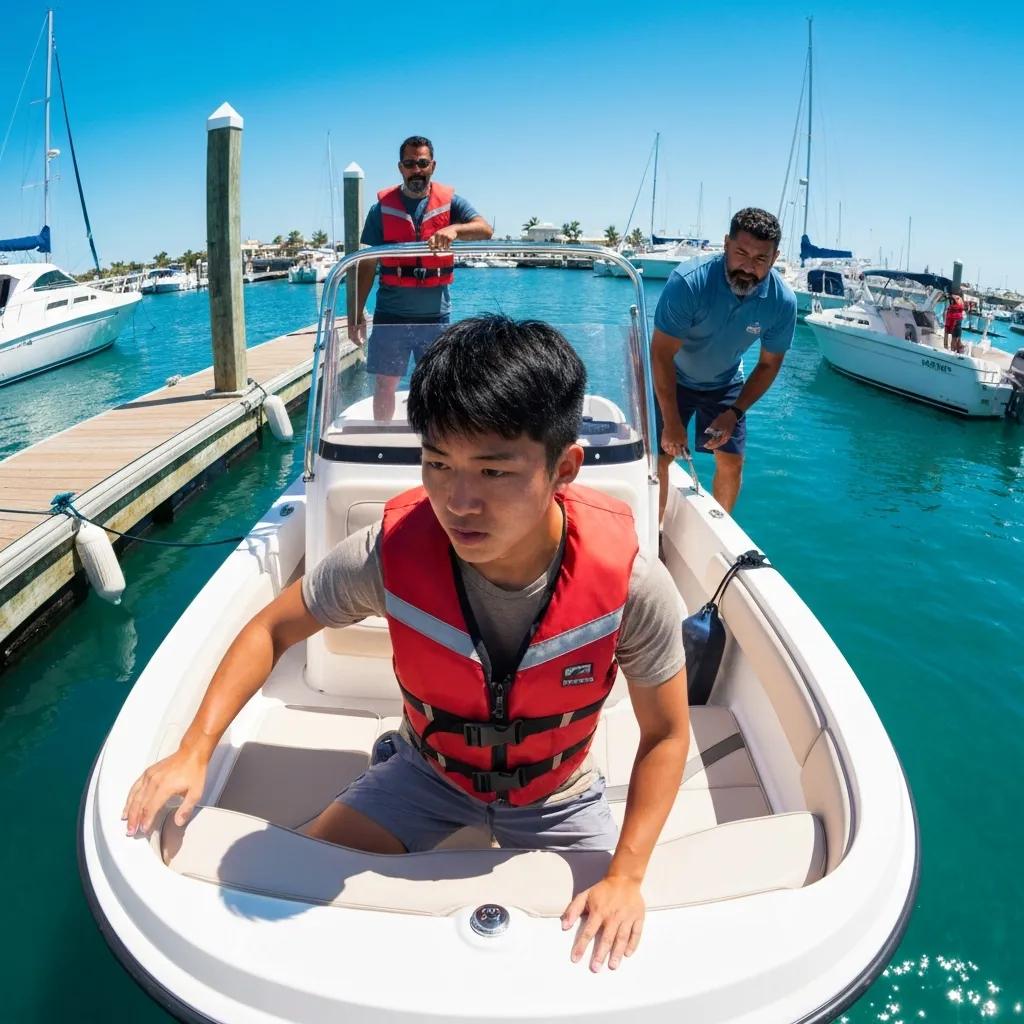
Docking is about planning, clear communication, and staging fenders and lines before you arrive. A slow, angled approach gives you room to correct. Brief your crew on tasks and commands, pre-position fenders and mooring lines, and pick a docking side that works with the wind and current. Use short throttle bursts and neutral for fine adjustments; a bow thruster or a crew member handling a stern line can make tight moves much easier.
- Approach: Use a slow, angled approach while accounting for propeller influence.
- Communication: Give clear, simple commands and assign roles to crew.
- Securing: Set spring lines once you’re alongside to control forward/back movement.
Practice these steps in different conditions and docking will become routine instead of stressful.
What Are Essential Boat Maintenance Tips for New Boat Owners?
Regular maintenance keeps your boat safe, extends equipment life, and prevents expensive failures. Focus on tasks that protect the engine, hull, and electrical systems. Flush engines after saltwater trips, check batteries seasonally and monthly, wash the hull to prevent growth, and monitor fuel systems for water. Small checks after each outing and scheduled seasonal service stop small issues from growing into big problems. When a job is beyond your comfort level, use a professional service yard.
The table below lists common maintenance jobs, how often to do them, and why they matter.
| Task | Frequency / When | Purpose |
|---|---|---|
| Engine flush | After saltwater trips | Flushes salt to reduce corrosion in cooling passages |
| Hull wash | Monthly (or after heavy use) | Prevents fouling and keeps fuel efficiency up |
| Battery check | Pre-season and monthly | Ensures reliable starts and powers essential electronics |
| Fuel filter inspection | Every season | Helps avoid clogged injectors and fuel-system problems |
| Steering & control check | Before every trip | Confirms safe maneuverability and avoids steering failures |
These routine tasks form an easy maintenance plan for new owners. For bigger jobs, a DIY bay or local service yard can help keep your boat in top shape.
If you prefer hands-on work or professional help, local facilities offer both DIY bays and full-service yards. Shell Point Marina’s wet slips, dry storage, and service yard give owners access to the space and services they need while building a local boating community.
How Do You Perform Basic Boat Maintenance Tasks?
Break maintenance into simple, safe steps and it becomes manageable. For example, a post-trip engine rinse means running fresh water through the flush ports until clear, then checking oil and coolant. Battery care includes cleaning terminals, topping serviceable cells, and doing a load test before the season. Hull cleaning starts with a freshwater rinse, then a gentle scrub to remove growth and a quick inspection for gelcoat or osmosis issues.
- Battery: Inspect, charge, and replace if capacity drops noticeably.
- Engine: Flush after saltwater use and follow manufacturer oil-change intervals.
- Hull: Rinse and inspect for structural or finish concerns.
Keeping up with these reachable tasks keeps your boat dependable and builds your confidence for larger maintenance projects or scheduled yard service.
What Are the Best Boat Storage Options: Wet Slips vs. Dry Storage?
Choosing storage depends on how often you launch, your boat’s size, and how much maintenance you want to do. Wet slips give you immediate water access plus on-dock power and water—great for frequent use. Dry storage reduces constant water exposure, limiting corrosion and hull growth, and works well with trailer or rack systems for off-water protection.
Below is a practical comparison to help match storage to your needs and maintenance goals.
| Storage Option | Key Features / Amenities | Best For |
|---|---|---|
| Wet Slip | Power, water, on-dock access, immediate launch | Boaters who go out often and value convenience |
| Dry Storage | Out-of-water protection, less hull exposure | Owners who want reduced fouling and lower maintenance |
| DIY Yard / Service Yard | Access to repair bays and tools | Owners who do their own work or need pro services |
In short: wet slips favor convenience; dry storage reduces long-term upkeep. Many boaters combine storage choices with scheduled service to balance access and protection.
Shell Point Marina’s mix of wet slips, dry storage, and service-yard options helps owners find the right balance between convenience and care while building a local boating community.
How Do Weather and Local Conditions Affect Beginner Boaters in Tampa Bay?
Weather and water conditions shape nearly every boating decision in Tampa Bay. Winds, tidal currents, and sudden squalls can change sea state quickly, so learn local patterns, check marine forecasts before you leave, and plan conservative return times. Understand how wind interacts with channels, bridges, and shallow flats so you can choose sheltered anchorages and avoid areas prone to choppy waves.
Adopt simple decision rules—postpone trips when gusts or seas are beyond your skill level, or pick protected routes when conditions look marginal. Local knowledge of shoals, channels, and navigation aids prevents groundings and makes route planning much simpler for new boaters.
How Can You Understand and Use Marine Weather Forecasts?
Marine forecasts give you wind speed and gusts, sea state, visibility, and warnings—pay attention to the numbers that matter to small boats. Watch sustained winds and gusts, predicted wave heights, and short-term convective warnings. For many small craft, sustained winds above 15–20 knots or seas over 2–3 feet are conditions that challenge beginner skippers. Use forecasts to set clear go/no‑go limits and choose protected routes when necessary.
- Check wind (sustained & gusts): Note both the steady wind and the expected gusts.
- Assess seas and tide: Opposing tides and high seas create confused water that’s harder to handle.
- Watch for convective activity: Squalls can bring rapid wind and heavy rain.
Reading forecasts this way improves decision-making and lowers exposure to Tampa Bay’s quick changes. It also prepares you to interpret the navigation markers and rules covered next.
What Local Waterway Rules and Navigation Markers Should Beginners Know?
Navigation markers and local regulations are the basics of safe travel. Tampa Bay uses IALA-B buoyage, where green and red lateral markers show channel sides when returning from sea; cardinal marks and special marks indicate hazards and features. Speed zones, bridge rules, and anchorage areas vary locally—check notices to mariners and current charts before you go.
- Marker colors: Red and green mark channel sides—keep red to starboard when returning from sea under IALA-B.
- Speed zones: Respect no-wake and reduced-speed areas to protect wildlife and shorelines.
- Charts & aids: Use updated charts and local aids to navigation for accurate planning.
Knowing marker meanings and following local rules keeps beginners out of trouble and makes Tampa Bay passages predictable and safer.
What Emergency Procedures Should Every Beginner Boater Know?
Emergency procedures give you a clear, practiced response when things go wrong. Key scenarios include man overboard, engine failure, fire, flooding, and medical incidents. For each, have a short checklist you’ve practiced: stop and return, throw flotation, alert crew, and call for help via VHF or visual distress signals. A filed float plan and reliable communications shorten response time and help rescuers find you quickly.
Here’s a compact action list for the most common on-water emergencies so beginners can remember the top priorities in a crisis.
- Man Overboard: Shout and point, throw a throwable device, slow or stop the boat, and return on a controlled track while keeping visual contact.
- Engine Failure: Deploy anchor if safe, try a restart with your checklist, and call for help on VHF channel 16.
- Fire: Shut off fuel, use extinguishers on the source, and prepare to abandon if the fire won’t stop.
- Flooding: Find the source, run bilge pumps, apply temporary patches, and be ready to abandon if flooding progresses.
These step-by-step priorities help you act quickly and keep everyone safer while waiting for help or executing a recovery plan.
How Do You Respond to Common On-Water Emergencies?
Effective response starts with a calm assessment and following practiced steps: protect life first, control the hazard next, then try to save the boat. For man overboard, keep the person in sight and give flotation before executing a recovery maneuver such as a Williamson turn or a controlled stop depending on your vessel. For fires, shut off fuel and ventilation, then use short bursts from an extinguisher. For flooding, locate the breach, apply internal patches, and run pumps to buy time.
- Assess: Identify the problem and how severe it is.
- Stabilize: Use flotation, pumps, or extinguishers as needed.
- Communicate: Alert crew and call for external assistance.
Run dockside drills so these responses become muscle memory; that practice makes real incidents far easier to manage.
When and How Should You Use Distress Signals and Communication Devices?
Pick your distress method based on urgency and range. VHF radio is your everyday tool for contacting nearby vessels and the Coast Guard; EPIRBs and flares are for life-threatening situations when immediate rescue is required. Use VHF Channel 16 for hails and MAYDAY calls, and follow the standard format: “Mayday, mayday, mayday,” then give your vessel name, position, nature of distress, and number of people aboard. Visual signals—parachute flares, handheld flares, or orange smoke—work well when rescuers are within sight.
- VHF: Primary routine and emergency hailing—learn basic procedures before relying on it.
- EPIRB: Activate only for life-or-death emergencies; it signals globally.
- Flares: Use to attract attention when rescue is nearby and visual contact is possible.
Knowing each device’s purpose and following correct protocols helps rescuers find you faster and more reliably.
Frequently Asked Questions
What should beginners know about boat insurance?
Boat insurance protects your investment and reduces worry while you’re on the water. Key coverages include liability (for damage or injuries to others), collision (for accidents that damage your boat), and comprehensive (for theft, weather, or non-collision damage). Compare quotes, read policy limits and exclusions, and talk with an agent to find coverage that fits your boat, planned use, and budget.
How can beginners improve their boating skills quickly?
Improve quickly by combining regular practice, formal training, and mentorship. Take local boating courses for navigation, safety, and handling basics. Practice short sessions in varied conditions to build muscle memory. Boating with experienced skippers and attending community workshops accelerates learning and gives practical tips you won’t get from reading alone.
What are the common mistakes beginners make while boating?
Common mistakes include skipping safety checks, failing to file a float plan, and not knowing local navigation rules. New boaters sometimes underestimate the weather and its impact or overload and misplace weight on the boat. Avoid these by prioritizing pre-departure checks, studying local regulations, and practicing good seamanship.
How can beginners choose the right boat for their needs?
Choosing the right boat starts with how you plan to use it—fishing, cruising, watersports—and how often you’ll go out. Consider size, passenger capacity, storage, and maintenance needs. Research models, read reviews, consult experienced owners, and test-drive candidates to understand handling and comfort before you buy.
What are the best practices for maintaining a boat?
Routine maintenance keeps your boat reliable and safe. Inspect the hull, engine, and electrical systems regularly, clean after saltwater use, and flush the engine as recommended. Keep a maintenance log to track services and follow the manufacturer’s schedules. Timely maintenance prevents costly repairs and keeps you on the water more.
Conclusion
Boating opens up great days, rewarding challenges, and an easy way to connect with others. Learn the essentials, pay attention to local conditions, and use community resources to build your skills. A supportive marina like Shell Point helps new boaters grow through on-site services, mentorship, and events. Ready to get started? Explore our services and join a community that values safety, learning, and time well spent on the water.